What if the next generation catamaran were designed by students? That is Yacht Club de Monaco’s vision as it launched the Monaco Energy Class Design Challenge 2027 on Tuesday 3 November. The competition is open to universities and engineering schools worldwide to design a platform that is more hydrodynamically efficient, without compromising safety or production feasibility.
Students are being invited to design a catamaran for the Energy Class and have until 1st May 2027 to submit their project. Finalists will be invited to present their designs in Monaco before an international jury at the 14th Monaco Energy Boat Challenge 29 June to 3 July 2027. The prize for the winning design team is €1,000.
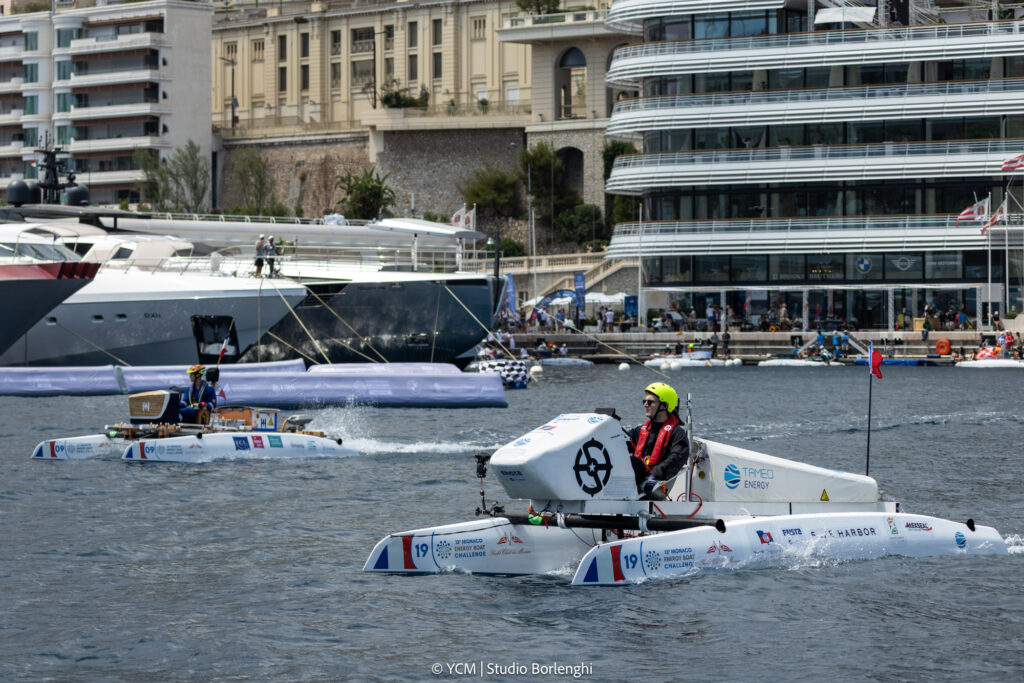
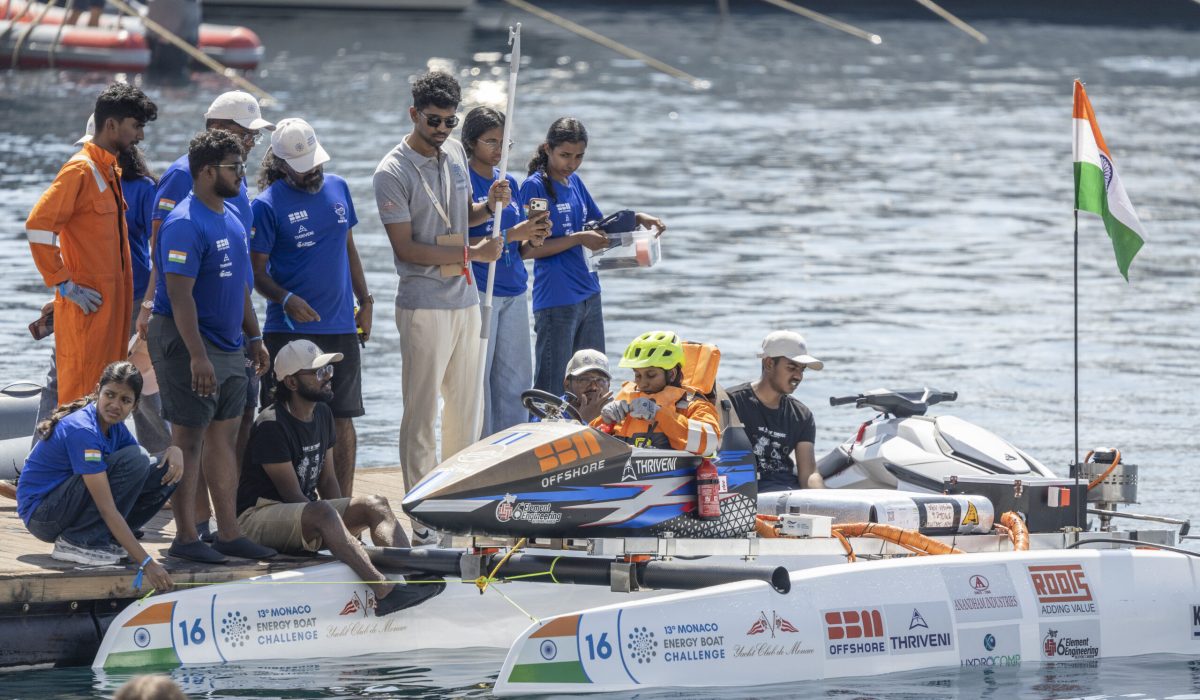
Since its launch in 2018, teams in the Energy Class have been provided with an identical catamaran by the organisers and had to develop their own cockpit, energy system and propulsion. It allows technologies to be assessed under identical conditions.
This new contest challenges students to rethink this common platform. The twin hulls can be up to 5.5m in length compared to the current 5.0m, and the beam up to 2.7m versus 2.5m. Each team retains control over its cockpit, energy system and propulsion. Apart from these stipulations there are plenty of options for the students to explore.
From hull shape to strength of materials and manufacturing processes, teams need to strike the right balance between performance, safety and feasibility. Students can also explore foil-assisted solutions, provided the catamaran stays on the surface, as full-flight capability is not permitted in the rules.
Another constraint is that the catamaran must serve as a platform that can accommodate different types of propulsion systems, energy sources and cockpit configurations. It must not be designed in a way that favours one technology over another. Indeed, students invited to design a catamaran for the Energy Class will have to comply with some demanding specifications.
Teams that fail to comply with the specification regulations will be disqualified. Structural dimensions and interfaces must be able to accommodate a total continuous power output up to 35 kW, including thrust, torque, impact and transient loads. The vessel, excluding the hulls, must not weigh more than 300kg in race mode and that includes the pilot who must weigh at least 70kg.
The catamaran must also meet design C category standards which apply to all pleasure craft in France. In other words, hulls must be able operate in conditions up to Beaufort Force 6 and waves up to 2 metres.
The contest is open to students studying naval architecture, marine engineering, hydrodynamics, composite materials or industrial design. Teams can combine different areas of expertise and get external advice, provided they remain the principal designers of their project.
Teams have several months to work on a project. An optional preliminary progress review is scheduled for 12 March 2027. Completed projects must be submitted, in English, before 1st May 2027.
Entries will be examined during the month of May. Finalists will be informed if they have been selected to go to Monaco and present their work at the 14th Monaco Energy Boat Challenge.
As well as drawing board designs, these students will need to justify technical choices and convince the jury that production can be scaled up to be the Energy Class catamaran platform.
Launched in 2018, the Energy Class has already enabled lots of university teams to put their technology to the test on the sea. With this year’s competition, Yacht Club de Monaco invites them to work on elements that until now were standardised and mandatory for all competitors.
The winning design will not automatically become the new Energy Class platform. It will still need to undergo engineering studies and require a prototype to be built and tested before a decision is made regarding its adoption. Candidates therefore need to demonstrate that their catamaran can be built, first as a prototype, then as a small production run of ten units while keeping tight control on costs.
For that is the 2027 Monaco Energy Boat Challenge’s ambition: to have a platform based on what students have designed that could be used for the Energy Class in future editions.